Thank you for reaching out!
We'll be in touch shortly.
Oops! Something went wrong while submitting the form. Please refresh the page and try again.
Engage with an elderly virtual patient, explore social determinants of health, & receive personalized feedback to improve age-friendly care in the Bronx.
The Hartford Institute for Geriatric Nursing (HIGN) at NYU Meyers College of Nursing and the Jewish Association Serving the Aging (JASA) have partnered to develop an asynchronous, immersive learning experience on geriatric care for nurses, social workers, and physicians.
For the development of the experience, the group is leveraging Wonda, and its advanced capabilities tocreate interactive, AI-powered simulations and assessments.
This work is part of a larger $5 million grant awarded to the group and Montefiore Medical Center, the Bronx-based delivery system of Montefiore Health System, by the Geriatrics Workforce Enhancement Program at the Health Resources and Services Administration (HRSA).
The purpose of this simulation program is to improve the care delivered to the older adult population in the Bronx by expanding the capacity of the primary care and the community-based workforce to provide age-friendly and dementia-friendly care and mitigate the impact of social determinants of health.
For the immersive learning component specifically, the intention was to give learners an opportunity to better understand the complexity of elderly care through immersive practice:
The team has designed a four-step program that guides learners through a full authentic case, including:
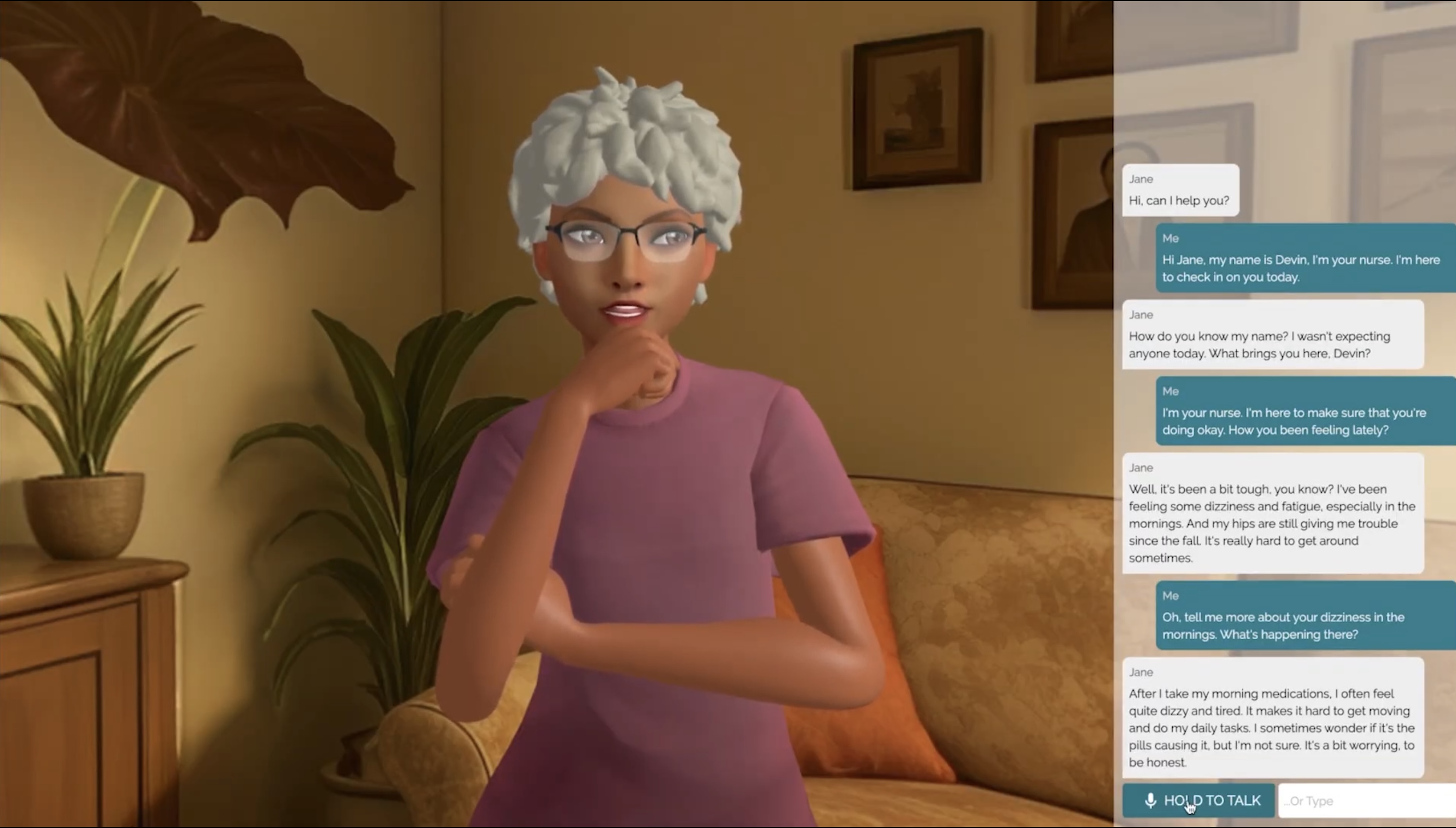
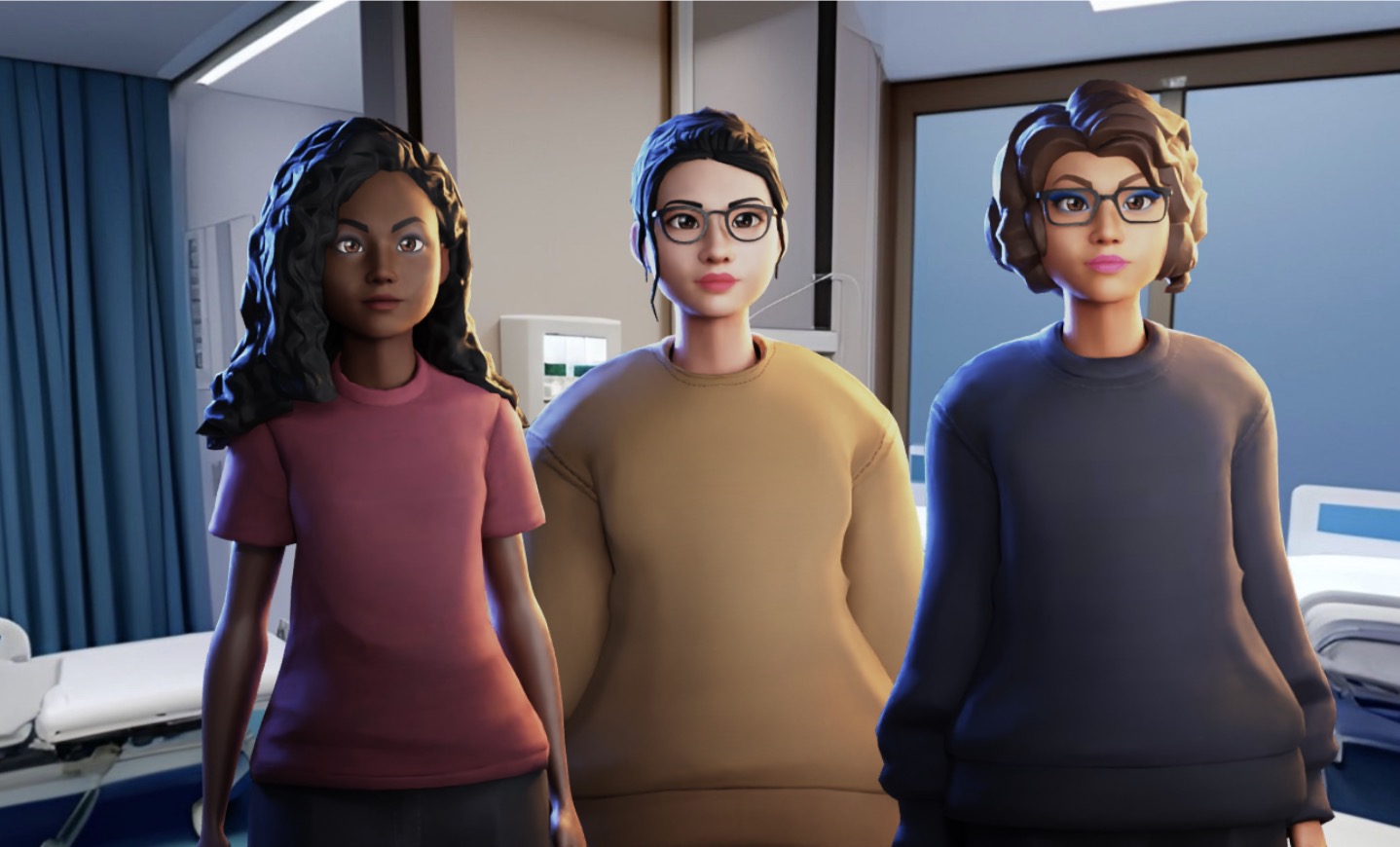
Throughout the program, learners interact with two AI Characters: (1) Lili, a guide and coach who introduces the program and then helps the learner debrief and reflect after the tour and home visit; and (2) the patient Ms. Jane Thomas, an 80-year-old Jamaican woman who has lived in the Bronx for the past few decades. Several methods of interaction are embedded to allow for different learning styles and needs.
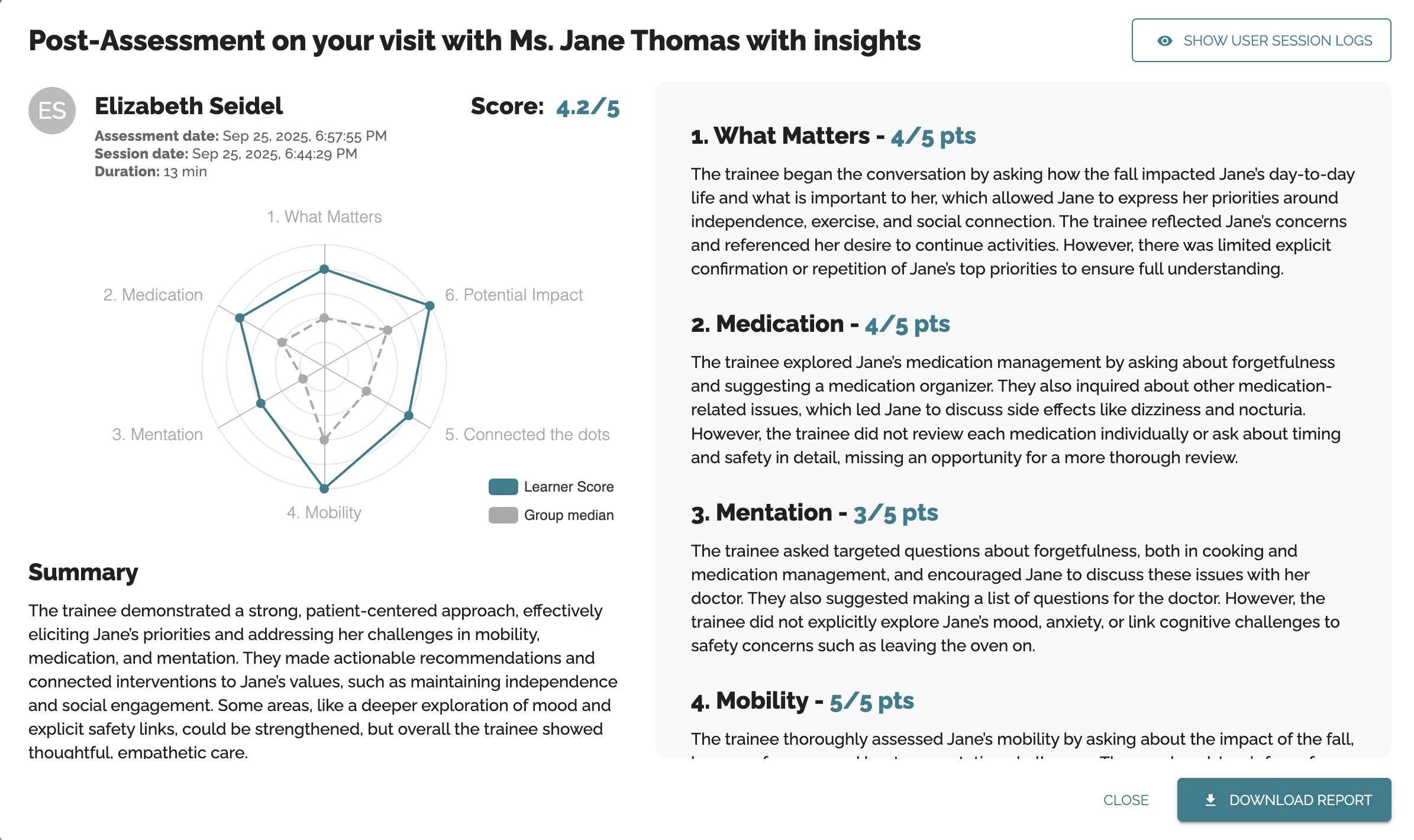
With this learning experience, NYU Meyers and HIGN seek to educate over 5,000 physicians, medical residents and fellows, nurses, social workers, pharmacists, community health workers, home health aides, medical, nursing, and social work students and provide training in the Bronx in primary care sites, nursing homes, home care agencies and community-based organizations.
Here is a testimonial from Tara Cortes, the executive director at HIGN / NYU Meyers: